From Chaos to Control: How Unified Systems Change Restaurants
Chaos Is Not a Management Strategy
Many restaurants operate in constant reaction mode.
Peak hours feel unpredictable.
Managers firefight instead of manage.
Staff rely on memory instead of systems.
This chaos isn’t caused by people — it’s caused by disconnected processes.
Unified Systems Create Operational Calm
When systems are unified, something unexpected happens:
Operations slow down — in a good way.
Information flows automatically:
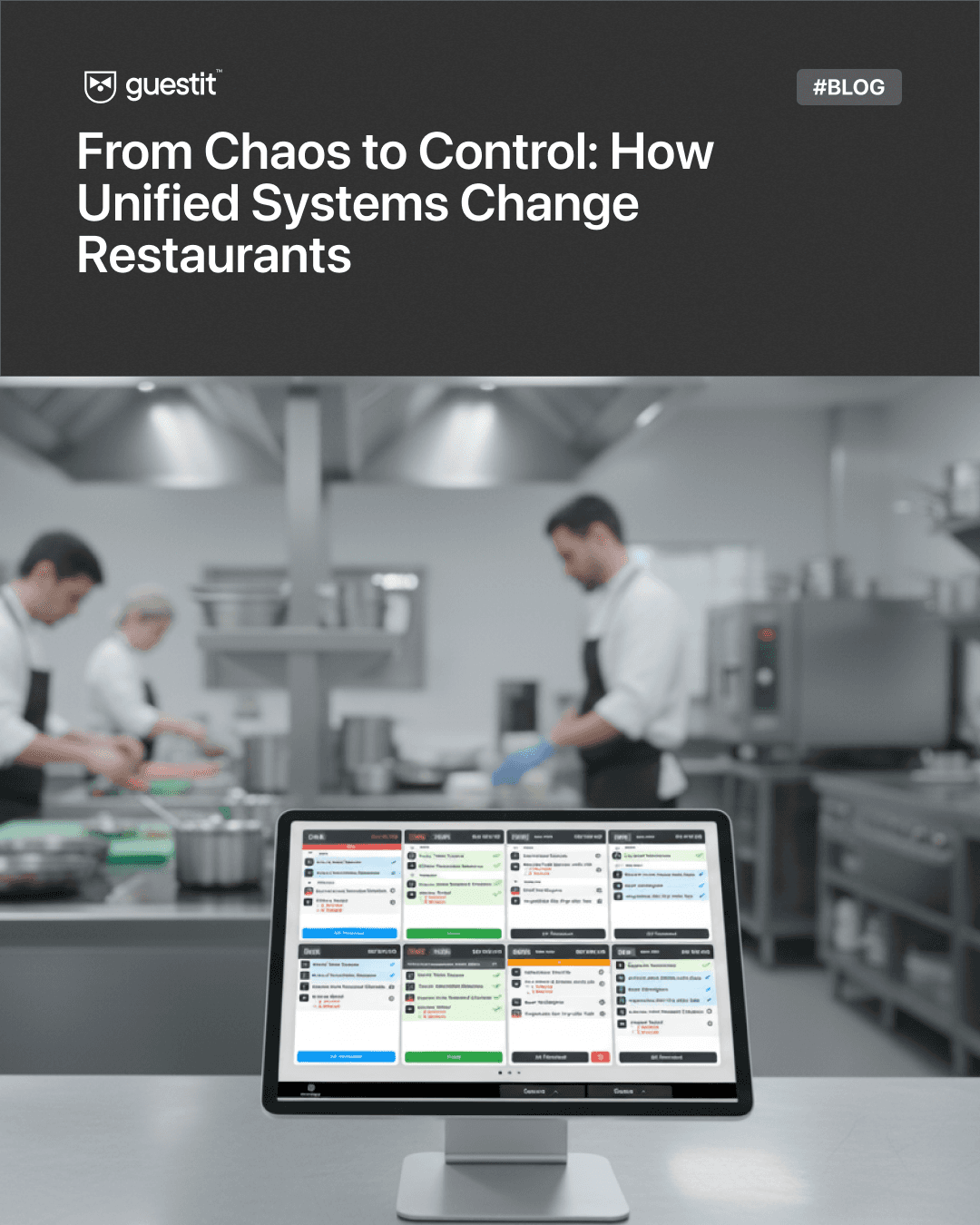
Orders update kitchens instantly
Table statuses reflect reality
Managers see problems before they escalate
There’s less noise, less confusion, and fewer emergencies.
Control Comes from Visibility
Unified systems give every role the right level of insight:
Staff see what matters to them
Managers see performance in real time
Owners see trends, not guesses
Control isn’t about watching people — it’s about understanding systems.
Kitchens Benefit the Most
Kitchens thrive on clarity.
Unified systems:
Reduce duplicate tickets
Eliminate verbal relays
Align preparation timing with service flow
Less stress. Better output. Fewer mistakes.
The Impact on Staff Retention
Staff burnout is often blamed on workload.
In reality, it’s caused by bad systems.
Unified platforms:
Reduce mental overhead
Simplify training
Minimize conflict between roles
When work feels predictable, people stay longer.
Scaling Without Losing Quality
With unified systems:
New locations launch faster
Standards are enforced automatically
Performance is measurable across branches
Growth becomes repeatable — not risky.
Conclusion
Unified systems don’t remove the human element.
They remove the chaos that hides it.
From chaos to control isn’t about technology alone —
it’s about creating space for better hospitality.