
From POS to Platform: How Modern Restaurants Are Consolidating Their Tech Stack
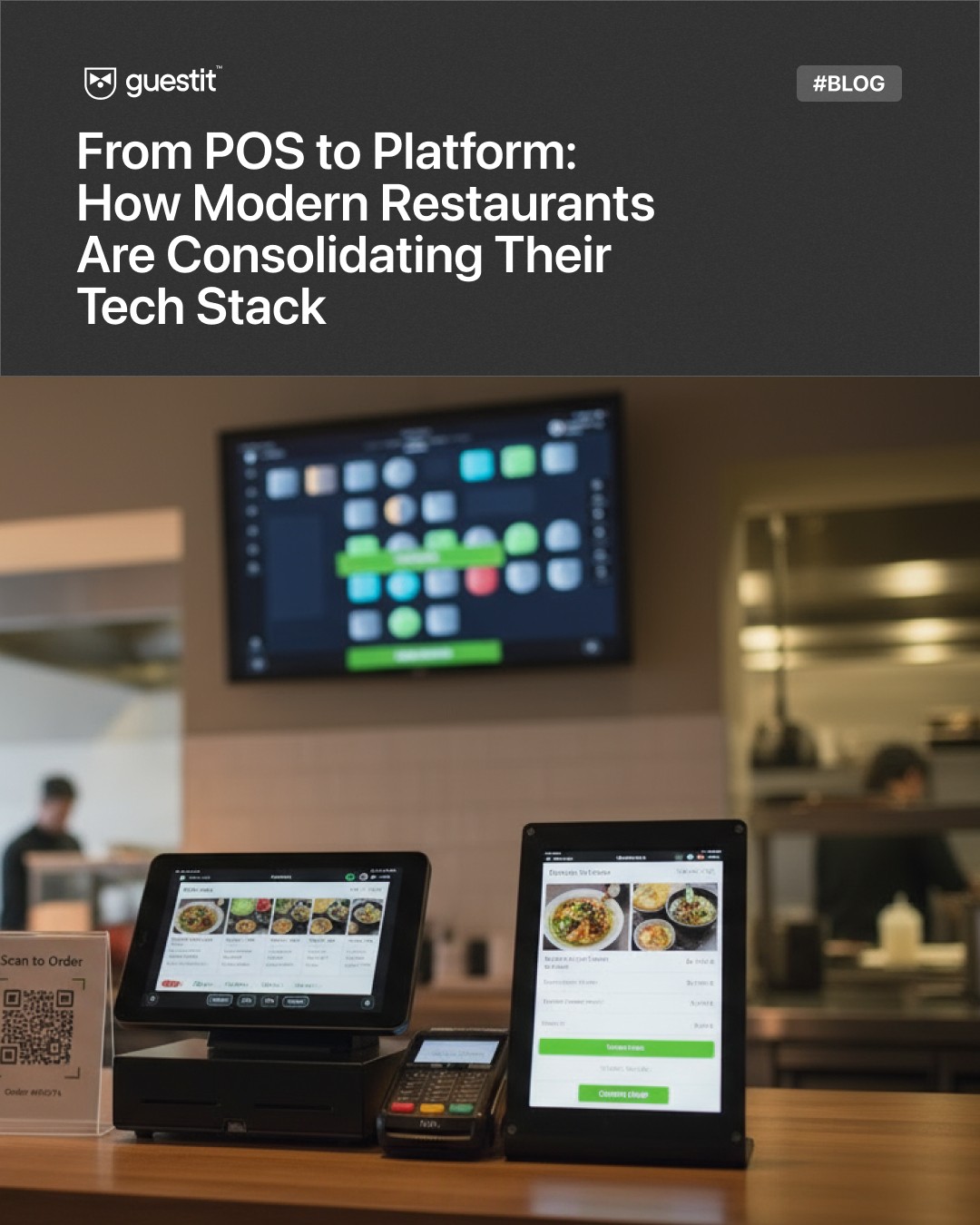
For years, the POS system sat at the center of restaurant technology.
It processed payments.
It printed tickets.
It tracked sales.
Everything else lived around it.
Online ordering came from another provider.
Kitchen displays were added later.
QR menus appeared as separate tools.
Analytics came from exported reports.
At first, this seemed flexible. Restaurants could choose the best tool for each function. Over time, however, that flexibility created complexity. Each new tool added another integration, another login, another potential point of failure.
The restaurant tech stack kept growing — but operations didn’t become easier.
Orders sometimes had to be re-entered.
Modifiers were double-checked between systems.
Kitchen tickets required clarification.
Managers reconciled reports from multiple platforms.
These small tasks added friction throughout the service flow. Guests never saw the systems behind the scenes, but they felt the results through slower service, occasional mistakes, and inconsistent experiences.
This is why the industry is shifting away from isolated tools and toward unified platforms.
Instead of stacking separate systems on top of a POS, modern platforms bring digital menus, ordering channels, kitchen operations, payments, and analytics into one environment. Orders move directly from the guest to the kitchen. Payments update automatically. Data appears in real time.
The POS is no longer just a terminal. It becomes the operational core of a connected ecosystem.
When every ordering channel exists within the same system — whether it’s QR menus, kiosks, tablets, or staff terminals — orders follow one consistent path through the restaurant. Information stays attached to the order. Kitchens receive clear instructions. Managers see performance across the entire operation.
The result is fewer handoffs, fewer mistakes, and faster service.
Consolidating restaurant technology also changes how data is used. Instead of pulling reports from multiple platforms, managers gain a complete view of the business from one dashboard. Best-selling items, peak demand periods, order timing, and revenue patterns become visible instantly.
This visibility turns restaurant software into more than a transaction tool. It becomes a decision-making system.
The shift toward platforms is accelerating as restaurants adapt to modern expectations. Guests expect faster ordering, flexible payment options, and seamless experiences. Staff need systems that reduce manual work rather than adding to it.
Fragmented software struggles to keep up with these demands. Every additional tool increases complexity.
Platforms simplify the structure by bringing everything together.
When restaurant technology operates as one connected environment, service becomes smoother, errors decrease, and teams can focus on hospitality instead of managing systems.
Guests may never notice the change behind the scenes.
But they always notice when everything works effortlessly.